
A paying slot round is not always a profitable round
Published — UTC
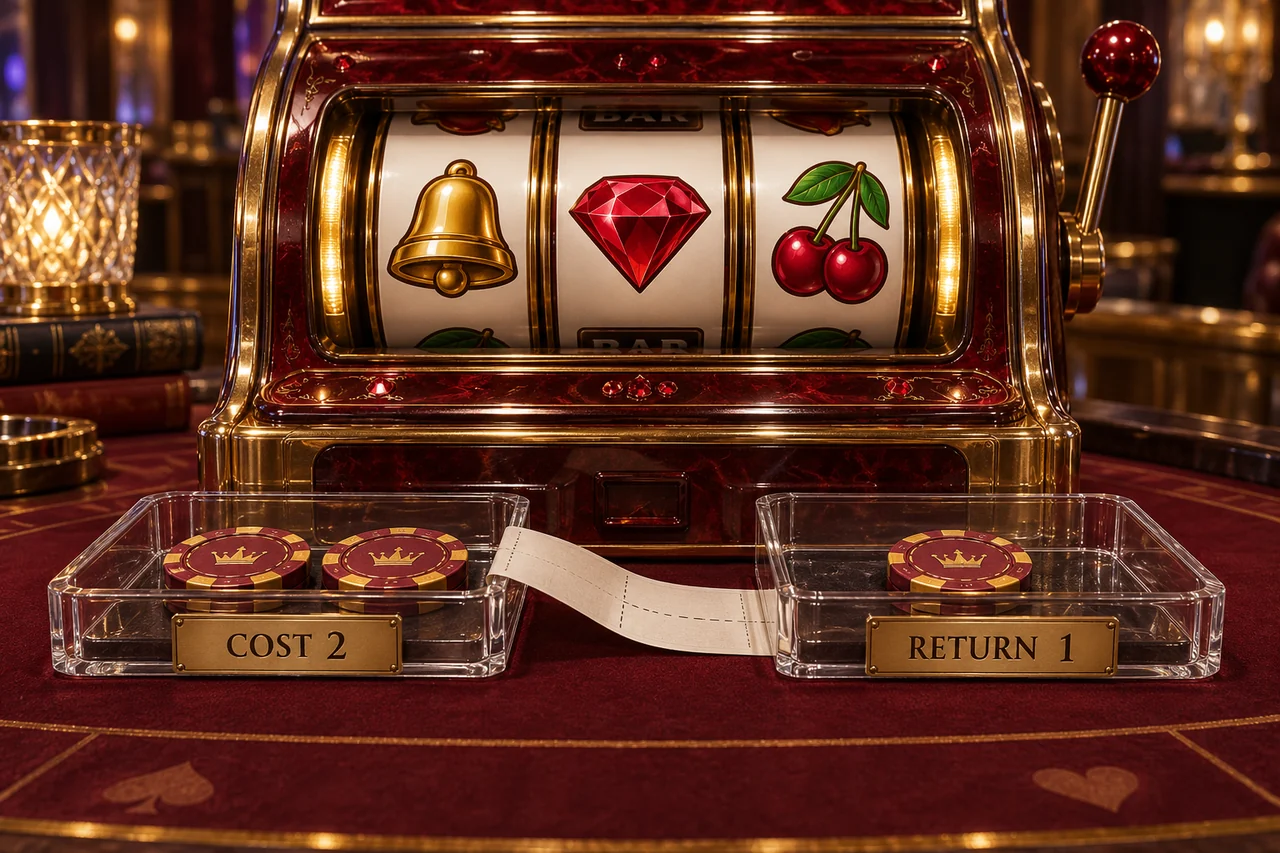
A round returning a positive amount can still return less than its cost. A count of paying rounds and a count of profitable rounds therefore measure different events.
Count the event you named
Our invented ten-round record charges 2 units for each round. Its returns, in order, are 0, 1, 0, 4, 0, 2, 0, 0, 1 and 0 units. This is a constructed example, not a JILI test or an estimate of a game's performance.
| Measurement | Qualifying rounds | Count |
|---|---|---|
| Nonzero return | 2, 4, 6, 9 | 4 of 10 |
| Return above cost | 4 | 1 of 10 |
| Return equal to cost | 6 | 1 of 10 |
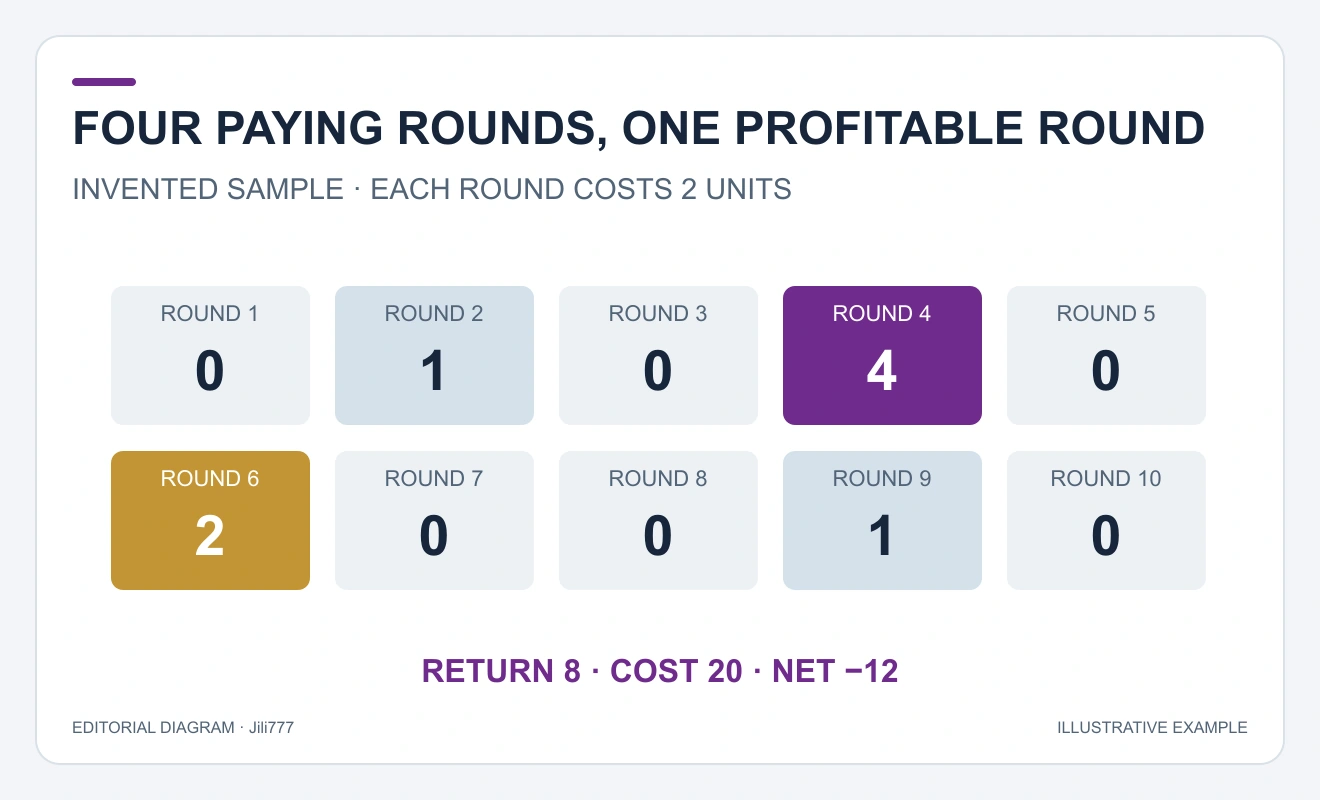
The paying-round proportion is 40%; the profitable-round proportion is 10%. Total returns are 8 against total stakes of 20, so the sample net is −12. The four nonzero returns do not imply a positive session result.
A displayed award is not the net change
The British product-design reference distinguishes returns at or below the stake when discussing celebration of results. Its British scope does not verify a JILI edition or local interface.
Keep accepted cost and settled return in separate columns. Then define a hit threshold explicitly: greater than zero, equal to the stake or greater than the stake are three different tests. Do not reuse one percentage under another label.
Use non-overlapping classes for the full sample
The ten rounds split into four exclusive groups: six with zero return, two with a positive return below cost, one returning exactly the cost, and one returning more than the cost. Their counts sum to ten. The broader “paying” category includes the last three groups, so its count of four must not be added to those groups again.
Round 2 returns 1 after costing 2; its net is −1 despite the positive award. Round 6 returns 2 after costing 2; its net is zero. Round 4 returns 4 after costing 2; its net is +2. Those distinctions explain why a positive-award animation or “win” label cannot replace a net calculation.
Reconcile the balance and the denominator
With a starting wallet of 30 and no other transactions, the example ends at 30 − 20 + 8 = 18. Its observed return divided by total stake is 8 / 20 = 40%. That happens to equal its 40% paying-round proportion here, but the denominators are different: stake units in one case and rounds in the other.
For a counterexample, change only the 4-unit return to 6. The same four rounds still pay, so the paying-round proportion stays at 40%. Total return rises to 10 and observed return-to-stake becomes 50%. The equality in the first sample was coincidental.
Recompute the test if stake varies
A return of 1 is profitable against a 0.50 stake but unprofitable against a 2-unit stake. Compare each settled return with its own accepted cost before counting profitable rounds. Keep pending awards, refunds and corrections separately identified so they do not silently become additional completed rounds. A ten-row teaching record cannot establish a game's long-run rate or make a future result due.